

Moules trompe-l'œil silicone Silikomart et Pavoni - Patissland

Trompe l'Oeil Molds

Silicone trompe-l'œil molds: create desserts that amaze

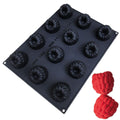
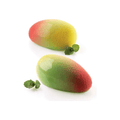
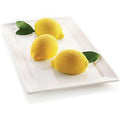
Create spectacular trompe-l'œil desserts with our selection of silicone molds by Silikomart and Pavoni. Lemons, raspberries, strawberries, pears, apples, pistachios, chestnuts, eggs, pebbles, soaps, sweet hamburgers: these molds allow you to reproduce objects or fruits with photographic precision, for entremets, mousses, and chocolates that always surprise. A very trendy signature in modern pastry, popularized by chefs like Cédric Grolet and Dinara Kasko, now accessible to all advanced amateur pastry chefs.

To explore more widely our silicone mold universe, find our silicone molds, our entremets molds, and the complete Silikomart and Pavoni selection.

Why choose a trompe-l'œil mold

Trompe-l'œil has become one of the signature techniques of contemporary pastry. It transforms a dessert into an object of surprise and conversation, making it a valuable asset for boutique pastry chefs, event caterers, and enthusiasts who want to impress.

  • "Wow" effect guaranteed: a lemon that looks like a real lemon but turns out to be a yuzu mousse with white chocolate—it's a multiplied customer experience.
  • Photogenic: trompe-l'œil desserts are stars on Instagram and TikTok. A direct marketing asset for shops.
  • Detail precision: Silikomart and Pavoni molds finely reproduce natural textures (lemon pores, strawberry seeds, pebble irregularities).
  • Versatility: mousses, bavarois, entremets, molded chocolates, ice creams, ganaches, panna cotta. Any setting preparation can be used in a trompe-l'œil mold.
  • Suitable for deep freezing: all our trompe-l'œil molds support deep freezing (down to −60°C depending on the model), essential for cleanly unmolding complex shapes.
  • Long-lasting reuse: made of high-end food-grade silicone, these molds last for years with minimal care.
The main families of trompe-l'œil molds

Our selection is divided into several themes, depending on the subject to reproduce and the level of realism sought.

  • Fruit trompe-l'œil: lemons, raspberries, strawberries, pears, apples, oranges, mangoes, kiwis, chestnuts. The classic of pastry trompe-l'œil, with demand soaring after viral videos by Cédric Grolet.
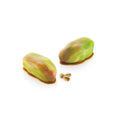
  • Dried fruit and nut trompe-l'œil: pistachio, walnut, almond, hazelnut molds. Perfect for desserts inspired by oriental cuisine or for a reinvented king cake.
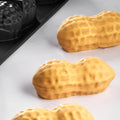
  • Object trompe-l'œil: soaps, pebbles, gemstones, pencils, sweet hamburgers, ultra-realistic chocolate eggs. The most creative category for event desserts.
  • Vegetable trompe-l'œil: tomatoes, squashes, garlic, pumpkins. Very popular for Halloween desserts and surprise desserts with sweet/savory themes.
  • Mushroom trompe-l'œil: Silikomart molds shaped like porcini or stylized mushrooms, ideal for the autumn season.
  • Signature trompe-l'œil: exclusive creations signed by chefs (Pierre Hermé, Dinara Kasko via Silikomart) with sophisticated architectural shapes that play with perception.
Technical features of the range
  • Material: high-end food-grade silicone (platinum silicone for Silikomart, premium silicone for Pavoni).
  • Temperature range: typically −60°C to +230°C depending on the model. Suitable for deep freezing and oven baking.
  • BPA-free: compliant with European food contact standards.
  • Unmolding: naturally non-stick, unmolding without greasing for most fatty or setting preparations.
  • Dishwasher compatibility: yes, top rack, standard program.
  • Available brands: Silikomart (signature design, widest range) and Pavoni (premium Italian quality, innovative creations).
Usage and unmolding tips
  1. Mandatory setting preparation: a trompe-l'œil cannot be made with a liquid preparation. Prefer mousses set with gelling agents, bavarois, whipped ganaches, gelled fruit inserts, or tempered chocolates.
  2. Deep freezing: fill the mold, freeze for at least 6 to 8 hours (ideally overnight) before unmolding. The more thoroughly frozen the piece is inside, the cleaner the unmolding.
  3. Unmolding while still frozen: take the mold out of the freezer, unmold immediately before condensation forms. This preserves detail precision and prevents melting.
  4. Trompe-l'œil flocking: then apply a colored velvet spray (yellow for lemon, red for strawberry, green for apple) on the still frozen piece to give the ultra-realistic final look.
  5. Finishing: add details (stem, leaf, color spot) with fat-soluble colorants or edible paints using a fine brush.
  6. Thawing in the fridge: place the flocked piece in the refrigerator 4 to 6 hours before serving. It regains its soft texture inside.
  7. Storage: store the molds flat, away from direct light and odors (silicone absorbs ambient aromas).
Trompe-l'œil recipes by Patissland

Patissland has published several step-by-step recipes to get you started with trompe-l'œil, designed to work with the molds from this collection.

To prepare your inserts and coulis, also check out our mango coulis recipe and our passion fruit bavarois, two bases that work particularly well with fruit trompe-l'œil molds.

Additional equipment for a successful trompe-l'œil

A beautiful trompe-l'œil depends not only on the mold: the finishing is as important as the shape. Here is the additional equipment to prepare.

  • Colored velvet spray: essential for the matte and textured finish that creates the illusion of fruit skin. See our velvet sprays.
  • Lipophilic colorants: for hand-painted details (spots, gradients). See our lipophilic colorants.
  • Edible paints: for fine touch-ups with brushes. See our edible paints.
  • Pastry brushes: for applying paints and lusters. Essential for realistic details.
  • Edible decorations: gold leaf, glitter, mini pearls for the finishing touch. See our gold leaf and glitter.
  • Mirror glazes: for "glass" or "frosted" trompe-l'œil. See our mirror glazes.
FAQ – Trompe-l'œil Molds
What preparation can be poured into a trompe-l'œil mold?

Any preparation that sets when cold: chocolate mousses, fruit mousses, bavarois, whipped ganaches, panna cotta, jellies, ice creams, sorbets, tempered chocolates. The golden rule: the preparation must be firm enough once frozen to hold the mold’s shape during unmolding. Preparations that are too liquid or baked in the oven are not suitable.

Is velvet spray always necessary for the trompe-l'œil effect?

For a realistic "fruit" effect, yes. The velvet spray gives that matte and slightly flocked texture that mimics the skin of the fruit. Without velvet spray, unmolding results in a smooth and shiny finish that can work for certain effects (shiny pebbles, gemstones, glossy chocolates) but not for reproducing a fruit. The velvet spray is applied to the piece while still frozen, from 20-25 cm away.

How long should you freeze before unmolding?

At least 6 hours, ideally a full night (8 to 12 hours) for thick or complex pieces. The piece must be frozen through, not just on the surface. The deeper the freeze, the better the unmolding preserves fine details (skin texture, veins, irregularities).

Are trompe-l'œil molds oven-safe?

Yes, Silikomart and Pavoni silicone molds withstand oven temperatures up to +230°C. That said, trompe-l'œil is better suited for cold preparations or those set in the freezer (mousses, bavarois) than for oven baking. For molded tempered chocolates, you don’t need the oven at all.

How do you attach the stem or leaf of a trompe-l'œil fruit?

The stem is usually attached with a dab of melted chocolate just before the final chilling. The decorative leaf can be tempered chocolate poured on a transfer sheet, or modeled green sugar paste. Attach it with a dot of royal icing or melted chocolate on top of the piece.

Are trompe-l'œil molds accessible to amateur pastry chefs?

Yes, absolutely. The technique requires precision (respecting freezing times, careful flocking) but no advanced technical skills. It's even one of the most impressive visual effects for the effort/result ratio. To start, choose a simple mold like a lemon or raspberry and follow our step-by-step recipes.

How many pieces can you make with a trompe-l'œil mold?

Most Silikomart and Pavoni trompe-l'œil molds offer 6 to 8 cavities per mold, each corresponding to an individual piece. Some single-serving or large individual molds also exist. The details (number of cavities, volume per piece) are specified on each product sheet.

Can you make a trompe-l'œil with tempered chocolate?

Yes, and it's even one of the star uses of these molds. Temper your chocolate (ideally couverture, like Valrhona), pour it into the mold, tap out the excess to keep only a thin shell, let it crystallize in the fridge. You get shells shaped like fruits or objects, to fill with ganache, praline, or a filling. Guaranteed boutique effect.