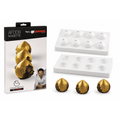
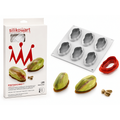


Silicone Mold Hazelnut 3D, Cédric Grolet for Pavoni (AF001), 8 cavities 82 ml
Step into haute pastry with the Moule Noisette 3D, from the prestigious collaboration between Chef Cédric Grolet and Pavoni Italia. This professional mold from the Cédric Grolet for Pavoni range is the ultimate tool to create the famous trompe-l'œil desserts. Its ingenious design allows you to reproduce the exact volume of a hazelnut with striking organic realism, thanks to a double hinged mold system that forms a whole 3D hazelnut with no visible seam line.
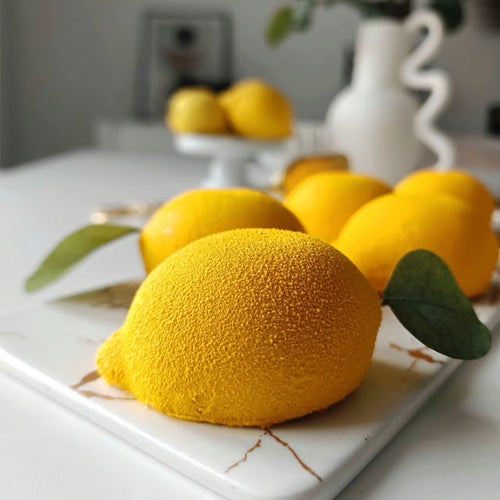
At Patissland, we distribute the complete Cédric Grolet × Pavoni collection: lemon, hazelnut, chestnut, vanilla pods, saint-honoré. The hazelnut mold is one of the iconic models in the range, recognizable by its perfectly spherical shape with the small characteristic cap of the fruit. A professional reference used by pastry chefs who want to create the trompe-l'œil desserts that have become a signature of contemporary pastry.
Detailed technical features
360° design with double hinged mold
Unlike classic half-sphere molds that require assembling two halves after demolding (with a visible seam line), this model consists of two hinged parts that snap together to form a whole hazelnut. The result: a full 3D volume with no visible seam line on the surface. This fundamentally distinguishes this mold from standard productions and allows for the iconic trompe-l'œil realism of Cédric Grolet.
Organic realism, direct molding
The texture and curves of each cavity were directly molded from models created by Cédric Grolet, capturing every irregularity for a "more lifelike than nature" finish. Each cavity is slightly different (just like two real hazelnuts in nature), giving your 8 pieces a unique and authentic character. This attention to detail is what sets a true signature mold apart from a generic silicone mold.
Format 8 cavities, efficient professional production
Each mold has 8 individual 3D volume cavities. You produce 8 individual desserts per batch. Ideal format for professional pastry chefs handling daily orders (shop, caterer, restaurant) as well as advanced amateurs hosting 6 to 8 guests. With two molds in parallel, you make 16 pieces at once, a size compatible with medium-sized receptions.
Exact dimensions
Dimensions of the entire mold: 300 × 175 mm
Dimensions of a hazelnut: Ø 54 mm × height 60 mm
Volume per cavity: 82 ml (refined individual portion)
Total mold yield: 656 ml (8 × 82 ml)
The 82 ml size corresponds to the standard for high gastronomy individual entremets. Generous enough to hold several stacked textures (praline insert + cream + mousse), compact enough for an elegant tasting without heaviness.
High-density platinum silicone, Pavoni quality
Made of high-density platinum silicone, this mold is designed to withstand intensive use in pastry labs or home kitchens. Platinum silicone (platinum-cured) is the highest quality food-grade silicone available. It never alters the taste of preparations, releases no substances even at high temperatures, and retains its elasticity over time. It is the material used in all kitchens of the world’s top pastry houses.
Thermal resistance, 40°C to +250°C
Particularly wide temperature range, from -40°C to +250°C. This range allows:
Freezing and deep-freezing to set mousses and creams before unmolding, essential for obtaining clean pieces with all the mold details
Oven baking for soaked biscuits, hazelnut financiers, individual tart bases integrated into the assembly
Dishwasher compatibility to simplify cleaning in production
Technique for making the hazelnut trompe-l'œil
Structure of a hazelnut trompe-l'œil entremet
The typical Grolet recipe for hazelnut includes 3 to 4 stacked textures:
Core: a flowing hazelnut praline insert for the surprise effect when tasting, a highlight of discovering the dessert
Heart surround: a smooth hazelnut cream, a rich and lasting link on the palate that adds roundness
Main body: a light hazelnut mousse based on Italian meringue or set custard, airy structure
Exterior finishing: a thin milk chocolate shell or brown velvet spray to reproduce the color and rough texture of the hazelnut shell
Step 1, Prepare the flowing praline insert
Prepare your hazelnut praline inserts using a 50 to 60% hazelnut praline, to which you add a small amount of gelatin to set just enough when frozen (soft insert when tasting, not hard). Pour into a mini silicone half-sphere mold (Ø 2.5 cm), freeze very hard for at least 6 hours. This is essential; a soft insert would mix with the mousse and ruin the textural contrast effect. Plan 8 inserts for 1 full mold.
Step 2, Hazelnut crémeux and core assembly
The hazelnut crémeux is made classically: milk + cream + egg yolks + sugar + hazelnut praline, cooked at 82°C in a bain-marie, then cooled and blended with an immersion blender to incorporate air. Spread the crémeux in a thin layer in an intermediate flexible mold (Ø 3.5 cm half-sphere), insert the praline insert in the center, freeze. You get a double core "crémeux + flowing praline" to insert into the mousse.
Step 3, Hazelnut mousse and assembly in the mold
Prepare the airy hazelnut mousse with Italian meringue + hazelnut cream (milk + yolks + praline) + gelatin + whipped cream. Fill each cavity of the Grolet mold to 70% with the mousse, clasp the two parts of the mold together (this is where the double mold design really makes sense), insert the frozen core through the top opening, fill with the remaining mousse. Tap the mold lightly on the work surface to remove air bubbles. Freeze for at least 6 hours, ideally overnight for perfect freezing through.
Step 4, Unmolding and finishing "hazelnut shell"
Once the preparation is frozen through (minimum -18°C), carefully unclasp the two parts of the mold. The flexibility of platinum silicone allows releasing the spherical shape without deformation or cracking, by simple pressure. Place the pieces on a rack, then apply the finishing:
Option 1, Brown velvet spray for the powdered/snow effect on the hazelnut base
Option 2, Light brushing with edible gold colorant or chocolate mirror glaze for the hazelnut cap and a more luxurious effect
Defrost 2 to 3 hours in the refrigerator before tasting.
Hazelnut chocolate shell variant
Simplified version for chocolatiers: pour tempered milk hazelnut chocolate directly into the mold in a thin layer, tilt to coat all the walls, pour out the excess, chill to set. You get a hazelnut-shaped chocolate shell that you can fill with praline ganache, crunchy praline, or gianduja. Seal with a second layer of chocolate. Spectacular for Easter, Christmas chocolate shops, or for "dried fruit" themed collections.
The Cédric Grolet universe and the Pavoni collection
The hazelnut in the Cédric Grolet universe
After the worldwide success of the Lemon Trompe-l'œil, Cédric Grolet extended his signature to several iconic dried fruits. The hazelnut is one of his flagship creations, paired with hazelnut praline, which is a classic of French pastry. This dessert regularly appears in his books and on his social media (Instagram @cedricgrolet). The AF001 mold allows you to reproduce this distinctive shape exactly in your own kitchen or lab.
Reference AF001, signature collection
The reference AF001 corresponds to the first signature model of the Cédric Grolet collection for Pavoni. Each mold in the range has its code: AF001 hazelnut, followed by other models (lemon, chestnut, vanilla, saint-honoré). These codes make identification easy in Pavoni catalogs and allow professionals to order without ambiguity. If you are developing a complete Grolet collection, keep these references for your inventory.
Pavoni Italia, a reference manufacturer
Pavoni is the Italian manufacturer of professional silicone molds, a benchmark since 1983. Its molds are used in all the major pastry houses worldwide. In 2018, Pavoni and Cédric Grolet signed an exclusive partnership to reproduce the chef’s signature creations in mold format. Each mold is designed from 3D scans of the chef’s real creations, ensuring absolute fidelity to the original dessert served in his pastry shops.
The book "Fruits" by Cédric Grolet, a technical reference
To master the Grolet technique completely, the book "Fruits" by Cédric Grolet (Ducasse Books, 2017) details the full recipes for various trompe-l'œil: candied fruits, creamy fillings, mousses, velvet coatings. It is THE ultimate reference for reproducing authentic desserts in their entirety. The book is available in French, English, Japanese, and Korean, and has sold over 100,000 copies worldwide. The hazelnut dessert is covered in detail with exact proportions and techniques.
Who is this mold for?
Professional pastry chefs, shops, and caterers
Professional pastry chefs use this mold to offer a high-end signature piece in their display. A hazelnut trompe-l'œil dessert stands out immediately from classic cakes and catches customers' eyes. The Instagram-friendly visual naturally drives traffic. For event caterers, it is a memorable piece at cocktail receptions and weddings.
Chocolatiers, shell and bonbon variations
Chocolatiers use this mold in many ways: chocolate shells filled with praline, large chocolate hazelnuts for Easter collections, signature bonbons in a premium selection. The instantly recognizable shape and realistic details make these pieces culinary collectibles that customers buy as much for their aesthetics as for their taste.
Advanced amateurs, Grolet technical challenge
For advanced enthusiasts who already master the basics of pastry (creamy fillings, mousses, frozen inserts, glazes), recreating a Grolet at home is one of the ultimate challenges. It is a full weekend project (2 days of spread-out preparation), but the result is spectacular. Guests' reactions to a tray of 8 homemade trompe-l'œil hazelnuts are well worth the technical effort invested.
Pastry schools and training
Pastry schools use Grolet molds to teach advanced techniques: creamy fillings, flowing pralines, frozen inserts, airy mousses, velvet glazes. It is an ideal teaching tool for a "contemporary pastry" module. The recognizable shape combined with the multiple required techniques makes it an excellent exercise to synthesize skills.
Food stylists and content creators
For culinary photo shoots, trompe-l'œil molds are extremely photogenic: instantly recognizable shape, textured surface that plays with light, warm hazelnut color. Food stylists and content creators on Instagram or TikTok often use these Grolet molds for engaging visual productions. If you are a pastry content creator, this mold guarantees high-impact photos.
Complementary products at Patissland
Other molds from the Cédric Grolet × Pavoni collection
Complete your Grolet collection at Patissland:
Lemon Trompe-l'œil mold, 8 individual cavities
KE057 Lemon mold, unique large size 1215 ml
Chestnut Trompe-l'œil mold, realistic chestnut skin texture
Vanilla Pod mold, for long desserts
Saint-Honoré mold, a modern take on the classic
Owning the complete collection allows offering several seasonal variations in display or restaurant menu.
Hazelnut praline and hazelnut paste
To make the flowing praline insert and hazelnut mousse, Patissland offers a range of hazelnut pralines and pure hazelnut paste of professional quality. The choice of praline is crucial; a good 50 to 60% praline gives a dessert with aromatic depth that low-end products cannot reach.
Brown velvet spray and gold colorings
Essentials for achieving the authentic look:
The brown velvet spray (colored cocoa butter) is applied on frozen unmolded pieces from 15 cm distance, creating the rough matte texture characteristic of the hazelnut shell
The gold food coloring to apply with a brush on certain areas for a premium luminous effect
The chocolate mirror glaze for a shinier finish like "coated hazelnut"
Molds for inserts (Silikomart half-spheres)
To make the praline and crémeux inserts at the heart of the entremet, you need small silicone half-sphere molds, Ø 2.5 cm for the praline and Ø 3.5 cm for the double praline + crémeux core. Patissland offers the corresponding Silikomart molds that stack easily in the freezer. Huge time saver compared to homemade DIY.
Couverture chocolate and coatings
For the milk chocolate shell version, Patissland offers several professional quality couverture chocolates. For an authentic trompe-l'œil hazelnut, choose a milk chocolate with natural hazelnut notes. For the mirror glaze version, a 70% dark chocolate gives the most visually elegant result.
Sosa pistachio paste, complementing Grolet recipes
If you develop a complete Grolet collection with several variations of dried fruits, the Sosa pistachio paste 1 kg is essential for pistachio-raspberry entremets and pistachio crémeux that often accompany hazelnuts in a display. Highly appreciated thematic consistency "premium dried fruits" by customers.
Frequently asked questions
What sets this mold apart from a classic half-sphere mold?
Three fundamental differences:
1. The double articulated mold system allows forming a whole 3D hazelnut without a visible seam line, whereas a half-sphere mold produces two shells to assemble with a clear demarcation
2. The organic texture and details were molded directly from Cédric Grolet’s models, offering realism impossible to achieve with a generic mold
3. The Pavoni high-density platinum silicone offers durability and unmolding precision far superior to standard silicones
Do you need to be very experienced to use this mold?
To achieve a result close to Grolet, yes, advanced pastry experience is necessary (creamy layers, mousses, frozen inserts, velvet spray). Expect a good level of enthusiast who has already made several multi-texture entremets.
For simplified use, you can very well use it to pour colored hazelnut milk chocolate (shells), simple mousse without insert, or even hazelnut ice cream. The mold itself is not difficult; it’s the full Grolet recipe that is technical.
How does the articulated double mold system work?
The mold consists of two silicone plates that fit together precisely. Each plate contains 8 half-cavities. You fill the cavities of the bottom plate with mousse, insert the frozen core, cover with more mousse, then position the top plate over it with a clipping system that ensures perfect sealing between the two parts. After freezing, you unclip the two plates and the hazelnuts come out intact, perfectly spherical and without a seam line.
Can you faithfully reproduce Grolet’s hazelnut dessert?
Yes, the full recipe is published in the book "Fruits" by Cédric Grolet (Ducasse Books) with all exact proportions and detailed techniques. With this mold + the book + quality ingredients (50 to 60% hazelnut praline, couverture cocoa butter, 200 Bloom gelatin), you will get a result very faithful to the original. The only potential difference is the chef’s skill acquired through many years of daily practice.
How long does it take to prepare 8 pieces?
For a complete Grolet entremet with double insert (runny praline + creamy) + mousse + velvet finish, count on 2 days spread out:
Day 1, prepare the praline and creamy inserts, freeze them separately (2 to 3 hours of active work + overnight freezing)
Day 2, prepare the mousse, assemble the entremets in the mold, clip, freeze (1 hour of work + minimum 6 hours freezing)
Finishing, unmolding + velvet spray or glaze (20 minutes)
Thawing, 2 to 3 hours in the refrigerator before serving
Total technical time, about 4 hours of active work spread over 2 days.
Can you bake in the oven with this mold?
Yes, up to 250°C, but this is not the mold’s main use. It is designed for mousse entremets + velvet finish (no baking). However, you can use it for soft hazelnut biscuits, financiers, or madeleines in the original shape. Note, however, that the 3D spherical shape is better suited for preparations that keep their structure (set mousses) than for batters that rise irregularly during baking.
How to clean the mold between uses?
1. Unclip the two parts of the mold
2. Wash by hand with warm soapy water using a soft sponge (recommended method to extend silicone lifespan)
3. Rinse thoroughly and let dry completely in open air before storage
Dishwasher use is possible but slightly accelerates silicone aging in the long term. Avoid sharp objects (knives, forks) that could cut the surface and compromise future unmolding.
What is the lifespan for intensive professional use?
With intensive use (several uses per week, frequent freeze/thaw cycles, repeated washing), a typical lifespan of 2 to 5 years for a Pavoni platinum silicone. With occasional use (1 to 2 times per month), 5 to 10 years. Signs of end of life include loss of elasticity in the clipping system, cracks at the corners, difficulty unmolding. Platinum silicone is among the most durable available, much more so than standard silicones which wear out in 6 to 12 months.
Is it suitable for entremets sold frozen?
Yes, perfectly. The Grolet entremets are naturally products that keep very well frozen (texture stable for 2 to 3 months at -18°C). Many professional pastry chefs produce in batches and store in the freezer, thawing on demand for display. The velvet finish or glaze is applied only when taken out of the freezer. The mold perfectly withstands repeated freeze/thaw cycles thanks to its thermal range of -40°C to +250°C.
How to store the mold between uses?
Store the mold flat, with the two parts separated or clipped together, in a dry and temperate place. Ideally in its original box or on a dedicated shelf. Avoid crushing it under heavy objects that could deform the impressions over time. Avoid direct sunlight and heat sources (oven, radiator). A well-stored mold retains its elasticity and sharp details for years.
- Order Preparation: 0 to 2 working days
- France, Belgium, Germany: 1 to 2 working days
- Europe: 2 to 5 working days
- Click & Collect Osny: 24-48h
- FR, BE, DE: based on weight
- Europe: based on country and weight
- Click & Collect Osny: Free