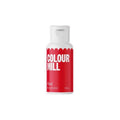


Colorants liposolubles chocolat - Colour Mill Silikomart Pavoni PME Patissland

Liposoluble Colorants & Chocolates

Liposoluble colorants: the exclusive solution to color chocolate and fats

Liposoluble food colorants are colorants specifically formulated with oil to perfectly blend into fatty preparations: tempered chocolate, cocoa butter, ganaches, buttercreams, fatty mirror glazes, white chocolate mousses. Their compatibility with fats makes them essential whenever working with chocolate, where no other colorant can be used without causing irreversible clumping.

Patissland offers more than 100 references of liposoluble colorants from the most recognized brands in the industry: Colour Mill (world reference for oil-based colorants), Silikomart (professional colorant range), Pavoni (historic Italian manufacturer), and PME Cake Colour Drops (British reference for colored chocolate). For other coloring techniques, see our gel colorants, our powder colorants, and our water-soluble colorants for macarons. For the full range, find the complete food colorant collection.

Why a liposoluble colorant is essential for chocolate

The rule is simple and absolute: water and chocolate are incompatible. This chemical incompatibility is the reason for liposoluble colorants.

  • Tempered chocolate contains cocoa butter, which is a fat. When a water-based colorant (gel, water-soluble, classic liquid) is added, the immediate mixture causes the chocolate to clump and become unusable. The cocoa butter separates from the other components, creating a hard and grainy mass.
  • Liposoluble colorants are based on neutral food-grade oil, perfectly compatible with cocoa butter. They disperse evenly without breaking the chocolate emulsion, without changing its temperature, and without altering its shine or final texture.
  • Vibrant colors, preserved shine: fat-soluble colorants give tempered chocolate intense colors without dulling the characteristic shine of properly tempered chocolate. Boutique pastry effect guaranteed.
  • Compatible with all chocolate techniques: polycarbonate candy molding, fatty mirror glazing, dripping, molded Easter chocolates, chocolate subjects, whipped ganaches, classic ganaches.

This technical specificity makes fat-soluble colorant an essential product for any pastry chef or chocolatier who regularly works with chocolate.

Fat-soluble colorant brands at Patissland

Patissland selects the most internationally recognized brands for fat-soluble colorants. Each has its own positioning.

  • Colour Mill: the global reference for oil-based food colorants. Australian brand acclaimed by cake designers and professional chocolatiers worldwide for the quality of its pigments, the intensity of its colors, and the stability of its formulations. Compatible with all fats (chocolate, cocoa butter, buttercream, ganache). See the complete Colour Mill collection.
  • Silikomart: known for its professional silicone molds, Silikomart also offers a range of fat-soluble colorants designed to accompany its mousse cake and chocolate candy molds. Practical format, perfect integration with the Silikomart ecosystem. See the Silikomart collection.
  • Pavoni Italia: historic Italian professional mold manufacturer, Pavoni complements its range with high-concentration fat-soluble colorants, particularly suited for couverture chocolate and premium confectionery. See the Pavoni collection.
  • PME Cake Colour Drops: British brand offering a range of fat-soluble colorants in dropper bottles, convenient for drop dosing. Well suited for white chocolate and fatty glazes.

All these brands are compatible with each other and can be mixed to create custom shades.

When to use a fat-soluble colorant

Here is the usage chart to identify preparations that absolutely require a fat-soluble colorant.

  • Tempered chocolate (couverture): dark, milk, white. For molding candies, bars, decorative subjects, signature plaques. Essential for vibrant colors on tempered white chocolate.
  • Cocoa butter: base used to decorate polycarbonate molds before pouring chocolate. Fat-soluble mixes perfectly with tempered cocoa butter.
  • Chocolate ganaches: classic or whipped, made with chocolate + cream + butter. The high fat content makes fat-soluble essential. See our ganache articles: vanilla, milk chocolate, dark chocolate.
  • American or Italian buttercream (very fatty): theoretically a water-soluble gel can still work, but fat-soluble is more stable and gives better results on very rich Anglo-Saxon style "buttercream" buttercreams.
  • Fatty mirror glaze: mirror glazes containing cocoa butter or white chocolate only support fat-soluble colorants.
  • White chocolate mousse and desserts very rich in cocoa: ideal for preserving color intensity without destabilizing the mousse.
  • Butter confectionery: coated fruit jellies, candied fruits, soft butter caramels.

Conversely, for water-based preparations (macarons, royal icing, meringues, syrups), be sure to use our water-soluble colorants. For fondant, classic French buttercream, biscuit, sponge cake, gel colorants are more versatile.

Colors available in fat-soluble form

The Patissland catalog covers the entire color range needed for chocolate making and creative pastry.

  • Intense primary colors: deep red, cobalt blue, bright yellow. Stars of polycarbonate candy molding.
  • Secondary and tertiary colors: orange, fir green, lime green, purple, fuchsia, pink, coffee brown.
  • Pastels: dusty pink, baby blue, soft green, beige, taupe, sage. Widely used in modern cake design on whipped ganaches.
  • Whites and blacks: opaque white to whiten naturally colored white chocolate, deep black for Halloween chocolates and gothic designs.
  • Metallic and pearlescent colors: some brands offer fat-soluble colors with metallic effects for molded chocolates with gold, silver, copper finishes.

For custom colors, mix several fat-soluble colors together: they are all compatible. For very intense shades (blood red, absolute black), buy the preformulated color directly because overdosing pigments affects the stability of tempered chocolate.

How to color tempered chocolate: step-by-step guide
  1. Temper the chocolate normally: melt your couverture chocolate (dark: 45-50°C, milk: 40-45°C, white: 38-42°C), cool according to the tempering curve (dark chocolate 28-29°C, milk 27-28°C, white 26-27°C), then raise to working temperature (dark 31-32°C, milk 29-30°C, white 28-29°C).
  2. Add the fat-soluble coloring: incorporate the coloring at the end of tempering, just before use. Count a few drops for 200 to 250 g of tempered chocolate. The coloring should be at room temperature (not cold from the fridge).
  3. Gently mix with a spatula: incorporate the coloring with slow, wide movements, without adding air. 30 seconds to 1 minute is enough for an even color.
  4. Check the color on a sample: do a small crystallization test on a plastic sheet or parchment paper. The color should be uniform, without streaks or spots.
  5. Mold immediately: pour your colored chocolate into polycarbonate molds or use it for coatings, glazes, dripping. Colored chocolate does not keep well when tempered, so it’s best to color only the amount used immediately.
  6. Multicolor effects: for multi-colored candies, use tempered and fat-soluble colored cocoa butter: apply with a brush or food spray gun inside the polycarbonate mold before pouring tempered white chocolate. Professional visual effect guaranteed.
Technical tips and mistakes to avoid
  1. NEVER use water-based coloring in chocolate: a common beginner mistake. The chocolate immediately clumps and becomes unusable. Use fat-soluble only.
  2. Gradually dose: modern fat-soluble colors (notably Colour Mill) are very concentrated. A few drops are enough for 200-250 g of chocolate. Overdosing does not increase intensity beyond a certain point and can affect crystallization.
  3. Work at the right temperature: chocolate must be at its working temperature (not too hot, not too cold). Chocolate that is too hot loses its temper during coloring; too cold, it starts to crystallize and does not mix evenly.
  4. Shake the bottle before use: liposolubles may slightly settle at rest. Shake the bottle well before each use to homogenize the pigments.
  5. Store away from heat: normal room temperature, never in the fridge (cold can solidify the oil and complicate drop dosing).
  6. Do not mix liposoluble and water-soluble: the two bases (oil and water) do not mix and create a heterogeneous dispersion with visible lumps. Choose one OR the other depending on your preparation.
  7. Colored cocoa butter: to decorate a polycarbonate mold before pouring, use tempered cocoa butter colored with liposoluble dye rather than colored chocolate directly. The result is cleaner and shinier.
  8. Long-term storage: well sealed, away from direct light and heat, liposolubles keep for several years without loss of intensity.
Inspirations and star applications

Liposoluble coloring opens spectacular decorative possibilities in chocolate making and creative pastry.

  • Molded chocolate candies: polycarbonate molding with colored shell and chocolate or ganache filling. See our polycarbonate molds.
  • Signature bars: colored chocolate bars for personalized gifts, themed bars (Valentine’s Day red, pastel Easter, deep red or snow white Christmas).
  • Mirror glaze for entremets: colored fat mirror glaze for entremets in Silikomart or Pavoni silicone molds. Boutique pastry visual effect. See our Silikomart molds and Pavoni molds.
  • Colored dripping: streams of colored chocolate elegantly dripping from the edges of a layer cake. A strong trend in cake design.
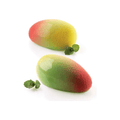
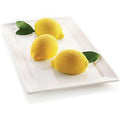
  • Pastry trompe-l'œil: fruit trompe-l'œil recipes use colored white chocolate to perfectly mimic real fruits. See our lemon trompe-l'œil and our raspberry trompe-l'œil.
  • Molded chocolate figures: animals, characters, Easter eggs, Christmas trees in colored chocolate.
  • Decorative plaques: flat, curved, or textured plaques in colored chocolate to decorate entremets and cakes.
  • Cake design with colored whipped ganache: coating layer cakes with colored white chocolate whipped ganache. Elegant pastels for weddings.

To explore all the possibilities of colored chocolate, complete with our Valrhona chocolate collection which offers the best couverture chocolates (Ivoire, Opalys, Dulcey, Caraïbe, Manjari).

Patissland and fat-soluble dyes

Patissland is one of the largest French stores specializing in cake design and chocolate making equipment and ingredients. Our fat-soluble dye section includes over 100 references selected from the most internationally recognized brands (Colour Mill, Silikomart, Pavoni, PME), covering all colors and all needs of modern chocolate making.

Stocks regularly replenished, fast delivery throughout France and Europe (Belgium, Switzerland, Germany, Spain, Italy, United Kingdom, etc.). Click and collect pickup is available at our Osny (95) store. Earn points on all your orders with our Members Benefits loyalty program.

FAQ – Fat-soluble dyes
What is the difference between fat-soluble and water-soluble dye?

The fat-soluble dye is oil-based, compatible with fatty substances (chocolate, cocoa butter, ganache). The water-soluble dye is water-based, compatible with aqueous preparations (macarons, royal icing, meringues). The two types never mix with each other. Choose based on the base of your preparation: fatty → fat-soluble, aqueous → water-soluble. See our water-soluble dyes.

How many drops of dye for 200 g of tempered chocolate?

General guideline: 3 to 6 drops for a pastel color, 6 to 12 drops for an intense color, on 200-250 g of tempered chocolate. Modern fat-soluble dyes like Colour Mill are very concentrated, always start with the minimum dose, mix, then adjust. Overdosing does not produce a more intense color beyond a certain threshold.

Can a fat-soluble dye be used in fondant?

Technically yes, but it’s suboptimal. Fondant is not a fatty substance: a fat-soluble dye mixes poorly and can create visible streaks. Prefer a gel dye (versatile) or a powder dye (pure pigments without liquid) for perfect results on fondant.

Which brand should I choose to color chocolate?

Colour Mill is the global reference, favored by professional chocolatiers worldwide for the quality of its pigments and the stability of its formulations. It’s the go-to investment if you regularly work with colored chocolate. See the complete Colour Mill collection. Other brands (Silikomart, Pavoni, PME) are also very good and perfectly suitable for occasional use.

Why does my colored chocolate lose its shine?

Three main causes: incorrect tempering (the chocolate was not crystallized according to the correct curve, an issue unrelated to the dye), cold dye added to tempered chocolate (cooled the chocolate and disturbed crystallization), or overdosing of dye which alters the chocolate matrix. Bringing the dye to room temperature before use and following tempering curves usually solves the problem.

Does fat-soluble dye change the taste of chocolate?

At usual dosages (3-12 drops for 200 g), no detectable impact on taste. At very high doses (for very saturated colors), a very slight aftertaste may appear, which is why it’s better to buy the intense preformulated color directly rather than overdosing a standard dye.

Can multiple fat-soluble dyes be mixed together?

Yes, absolutely. Fat-soluble dyes from different brands (Colour Mill, Silikomart, Pavoni, PME) are compatible with each other since they share the same oily base. You can create custom shades by mixing. In color theory, primaries + white = pastels, primaries mixed together = secondaries (red + yellow = orange, etc.).

How long does a fat-soluble dye last?

When tightly closed, at room temperature, away from direct light and heat, a bottle of fat-soluble dye can be stored for several years without loss of intensity. The optimal use-by date is indicated on each bottle. If you notice pigment settling, shake vigorously before use.