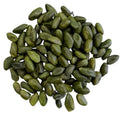





The Green Shelled Pistachios are the signature ingredient of professional pastry chefs and chocolatiers who make pistachio macarons, entremets, tarts, panna cottas, artisanal ice creams, financiers, and all types of creations requiring a natural and intense green color. The term "shelled" means the pistachios are freed from their thin brown skin surrounding the nut, thus revealing the characteristic bright green of the pistachio meat. This process, exclusive to premium pistachios, makes these nuts particularly suited for visually finishing pastries, where the natural green color immediately enhances the creation. Available in 2 formats (250 g for occasional use, 500 g professional format for regular workshops), these pistachios come from the species Pistacia vera (Anacardiaceae family), natural and unsalted to preserve their compatibility with all sweet preparations.
The Green Shelled Pistachios stand out with 6 advantages that make them the reference ingredient for professional pastry chefs and chocolatiers:
To explore the full range of dried fruits and pastry ingredients, see the Fruits Secs et Épicerie Patissland collection.
| Characteristic | Value |
|---|---|
| Product type | Blanched green pistachios (skinless) |
| Botanical name | Pistacia vera |
| Botanical family | Anacardiaceae |
| Color | Natural bright green |
| Form | Whole pistachios (not crushed) |
| Preparation | Blanched (skinless), natural |
| Salting | Unsalted |
| Roasting | Unroasted |
| Available formats | 250 g and 500 g |
| Storage | Keep refrigerated after opening, airtight container |
| Preferred use | Pastry, chocolate making, ice cream, natural snacking |
Blanching is a technical process that consists of removing the thin brown film (called "tegument") surrounding the pistachio after its shell is removed. This naturally occurring film partially masks the green color of the flesh and gives unblanched pistachios a brownish appearance.
How does blanching work?
Benefits for professional pastry:
Pro tip for pistachio paste: by grinding blanched pistachios in a food processor with a bit of neutral oil, you get a pistachio paste with a spectacular bright green color, without any gray or brown discoloration. This technique is what allows starred chefs to achieve pistachio entremets with their signature color.
Patissland offers several pistachio formats depending on your use. Here’s how to position these whole blanched pistachios compared to other formats:
| Format | Appearance | Preferred use |
|---|---|---|
| Whole blanched (THIS PRODUCT) | Bright green, skinless, whole | Macarons, ice creams, mousses, visible decoration, grinding on demand |
| With skin (not blanched) | Brownish, skin present | Snacking, appetizers, not for visual finishing pastry |
| Crushed / broken pieces | Green, irregular pieces | Inclusion in doughs, granolas, quick topping finish |
| Pistachio powder | Green, fine grind | Macaron doughs, frangipanes, cake doughs, invisible flavoring |
| 100% pistachio paste 1 kg | Intense green, paste texture | Filling, whipped ganaches, ice creams, entremets |
Selection criteria Whole blanched:
For inclusions without immediate grinding, opt instead for crushed or powder. For pre-made fillings, choose the 100% pistachio paste. The different formats complement each other in an experienced workshop.
Whole blanched pistachios cover 9 major professional uses in pastry, chocolate making, and ice cream:
Signature pastry:
Artisanal chocolate making:
Ice cream and cold creations:
For preparations directly using ready-made paste, see the 100% Patissland pistachio paste which saves grinding time and guarantees a uniform color.
Grinding shelled pistachios into freshly made pistachio paste delivers unbeatable aromatic freshness. Here is the professional technique:
Pro tip to intensify color: add a few drops of commercial concentrated green pistachio paste or a touch of green food coloring (E141 chlorophyll to stay natural) to your ground paste on demand. This combines the freshness of freshly ground paste with the color intensity expected by consumers used to vibrant pistachio desserts.
Dried fruits like pistachios are sensitive to oxidation and require some storage precautions:
Allergens: beware, pistachios are tree nuts. This product is not suitable for people allergic to tree nuts. Mandatory mention to be reported on labels of preparations containing these pistachios, in accordance with European food allergen regulations (INCO regulation 1169/2011).
What is the difference between peeled and unpeeled pistachios?
Peeled pistachios are freed from their thin brown skin (tegument) that hides the green color of the nut. Unpeeled pistachios keep this skin and have a brownish appearance. For visually finished pastries (macarons, ice creams, mousses), peeled pistachios are essential as they offer an intense bright green. For snacking, both are suitable.
How to make pistachio paste in a workshop?
Grind 250 g of peeled pistachios in a powerful food processor starting with short pulses to get a powder, then continuous grinding. The natural oils released gradually turn the powder into a thick paste (allow 5 to 8 minutes depending on the processor power). Adjust with 1 to 2 tablespoons of neutral oil if necessary. A light roasting beforehand (5-7 min at 150°C) intensifies the aromas.
What to do with pistachio paste?
Uses are multiple: whipped ganaches for macarons, pistachio-raspberry tart filling, pistachio ice cream and sorbet base, pistachio frangipane for galettes, light mousses for desserts, flavored financiers and madeleines, refined panna cottas, or spread on pastries for a gourmet breakfast.
Where to find professional quality pistachio paste?
Patissland offers 100% pistachio paste 1 kg ready to use, ideal for workshops with regular production looking to save time on grinding. For fresh grinding on demand that maximizes flavors, these peeled pistachios 250 g or 500 g are the reference raw material.
Do pistachios make you gain weight?
Pistachios are indeed calorie-dense (about 600 kcal per 100 g) due to their high natural fat content. However, they contain "good fats" (mono- and polyunsaturated) beneficial for cardiovascular health. Consumed in moderation in pastry or snacking, they are among the dried fruits recommended by nutritionists.
Where do the shelled pistachios come from?
Pistachios are mainly grown in Turkey, Syria, Greece, and California. Iranian pistachios (Kerman variety) are historically recognized for their intense aroma. The shelled pistachios sold by Patissland are selected for their bright green color and aromatic profile, ideal for professional pastry uses.
How many pistachios are needed for 1 kg of pistachio paste?
The yield is about 85 to 90% by weight: 1 kg of shelled pistachios produces 850 to 900 g of pure pistachio paste (without added oil or sugar). For high-production workshops, the 500 g format saves weighing time and offers a better quality-price ratio per gram.
Can they be used for natural snacking?
Yes, these pistachios are natural (unsalted, unroasted) and therefore perfect for healthy snacking. They can also be dry roasted in the oven for a few minutes to intensify their flavor before direct consumption. However, their size and taste quality make them primarily a premium pastry product.
To complete your arsenal of pistachio pastry ingredients, explore the Patissland Dried Fruits and Grocery collection. You will find other pistachio formats (crushed, powder, Sosa freeze-dried) as well as the 100% pistachio paste 1 kg ready to use for high-volume workshops. To explore other dried fruits (almonds, hazelnuts, cashews, pecans), check out the full collection. For pastry chefs working with the chocolate-pistachio pairing, complement with Valrhona couverture chocolates that pair beautifully with pistachio (70% dark chocolate, milk chocolate, Ivoire white chocolate). For Saracino flavoring pastes or XL 360 g pistachio flavoring paste, ready-to-use alternatives for quick flavoring.
Patissland, partner of demanding pastry chefs.