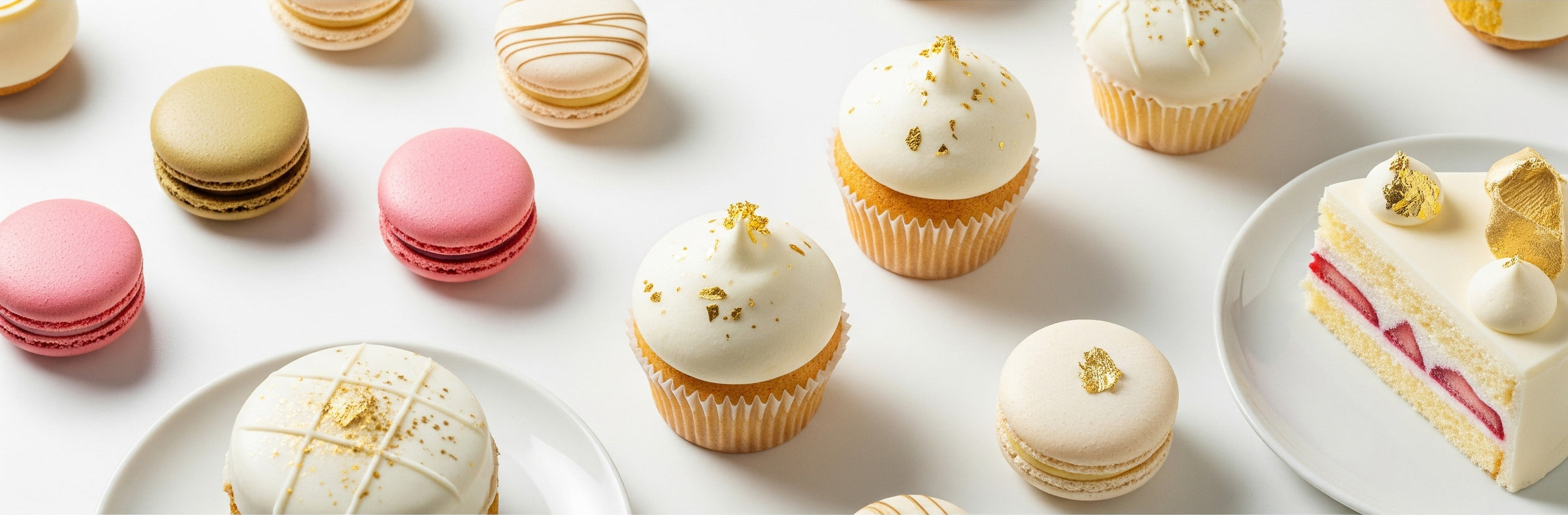



Flavor Pairing Guide
The flavor pairing guide with chocolate
How to pair dark, milk, white, and Dulcey chocolate with fruits, nuts, spices, herbs, and infusions. Precise ganache ratios, classic pairings, and signature creations.
Successful chocolate pairing depends on three factors: the chocolate’s flavor profile (cocoa, acidity, finish), the nature of the paired ingredient (fruity, fatty, spicy, herbal), and the texture of the preparation (liquid ganache, airy mousse, firm glaze).
This guide structures pairings by chocolate type and ingredient family, with precise ratios for ganache and brand references (Valrhona, Callebaut, Sosa) to jump straight into practice.
The 4 chocolate profiles to know
Before pairing, you need to understand what you’re pairing. Each chocolate has a dominant flavor profile that determines its ideal partners.
Dark chocolate
Intensity, bitterness, length. Likes tangy contrasts and warm spices.
Milk chocolate
Milky roundness, caramel notes, sweetness. Loves soft fruits and roasted nuts.
White chocolate
Cocoa butter + milk + sugar, no cocoa mass. Neutral base that amplifies added flavors.
Blond chocolate
Valrhona Dulcey. Slowly caramelized white chocolate. Notes of buttery biscuit, shortbread, condensed milk.
The cocoa percentage is only an indicator. A 70% dark chocolate can be fruity (Manjari Valrhona) or powerful and earthy (Guanaja). For precise pairings, reading the manufacturer’s flavor profile sheet is more useful than just the percentage.
Dark chocolate: 6 pairing families
Dark chocolate (60-85% cocoa) supports intense flavors. It calls for contrasts: acidity against bitterness, freshness against power, sweetness against tannins.
Tangy fruits
- Raspberry: iconic duo, acidity cuts bitterness
- Blackcurrant: fruity depth, similar tannins
- Morello cherry: classic northern fruit for dark chocolate
- Yuzu: modern version, precise citrus
- Lemon: perfect acidity/sugar balance
Black and dried fruits
- Blackberry: resonant vegetal tannins
- Fig: honeyed sweetness + crunchy seeds
- Prune: stewed version for ganaches
- Date: natural caramel, rich in sugars
- Dried apricot: tangy tenderness
Nuts and dried fruits
- Roasted hazelnut: universal couple (praline)
- Almond: roasted sweetness, neutral
- Pistachio: greenery and light saltiness
- Pecan: naturally buttery + caramelized
- Walnut: similar bitterness that amplifies
Spices and roasted flavors
- Coffee: bitterness that adds up (mocha)
- Cinnamon: oriental warmth
- Cardamom: fresh and woody note
- Espelette chili: Mexican cocoa signature
- Timut pepper: citrus + peppery, very modern
Aromatic herbs
- Mint: classic freshness (after-eight)
- Basil: modern, aniseed version
- Lemon thyme: herbal and tangy
- Rosemary: for sweet-savory dishes
- Lavender: floral, use very lightly
Infusions and liquids
- Earl Grey: bergamot on dark chocolate
- Lapsang smoked tea: bold version
- Rooibos: caffeine-free alternative
- Verbena: lemony finesse
- Espresso coffee: historic couple
Milk chocolate: 5 pairing families
Milk chocolate is round, sweet, and milky. It pairs well with ingredients that share its sweetness or bring a subtle contrast without overpowering it.
Soft and tropical fruits
- Banana: honeyed sweetness, classic pairing
- Coconut: exotic and milky
- Apricot: light acidity, balance
- Caramelized apple: chocolate tatin
- Poached pear: winter finesse
Roasted nuts
- Piedmont hazelnut: praline reference
- Sicilian pistachio: greenery + saltiness
- Macadamia: buttery crunchy luxury
- Peanut: American note
- Caramelized almond: roasted version
Caramel and sweet
- Salted butter caramel: star couple
- Toffee: English version
- Hazelnut praline: signature whipped ganache
- Condensed milk: intense sweetness (Dulce de Leche)
- Acacia honey: floral and delicate
Mild spices
- Candied ginger: exotic zest
- Green cardamom: Indian chai
- Madagascar vanilla: natural enhancer
- Tonka bean: bitter almond, freshly cut hay
- Gingerbread: winter note
Flavored infusions
- Chai tea: Indian spices + milk
- Matcha tea: trendy Japanese greenery
- Hazelnut coffee: Parisian couple
- Cappuccino: foam version
- Hazelnut milk: possible vegan ganache
White chocolate: 5 pairing families
White chocolate in pastry is a blank canvas. Without cocoa mass, it acts as an enhancer for added flavors rather than a dominant partner. It carries the most subtle aromas: flowers, fine herbs, rare citrus.
Tangy fruits
- Lime + raspberry: contrasting alliance
- Yuzu: refined Japanese citrus
- Bergamot: floral and tangy
- Menton lemon: Mediterranean version
- Calamansi: trendy exotic citrus
Exotic fruits
- Mango + passion fruit: iconic tropical duo
- Lychee + rose: Pierre Hermé signature
- Coconut + pineapple: piña colada version
- Guava: tropical floral note
- Mangosteen: rare exotic
Flowers and floral infusions
- Rose: Damascus or Centifolia, precise dose
- Orange blossom: oriental note
- Violet: candied or infusion
- Jasmine: infused tea version
- Lavender: use sparingly
Fine herbs
- Lemon verbena: tangy finesse
- Lemongrass: Asian note
- Tarragon: aniseed and unexpected
- Thai basil: exotic note
- Peppermint: lozenge version
Signature and trending notes
- Green pistachio: freshness on white
- Black sesame: Japanese roasted note
- Matcha: bitterness against sweetness
- Tonka: white enhancer
- Wasabi: ultra-modern signature
Blond Dulcey chocolate: the 4th revolution
32%
A caramelized white chocolate
Dulcey chocolate was born from a controlled accident in 2012 at Valrhona laboratories: white chocolate left for 10 hours in a bain-marie. The result: a slow caramelization of lactose and sugar, producing a blond chocolate with notes of buttery biscuit, Breton shortbread, and caramelized condensed milk.
It gave rise to a 4th official category of chocolate, halfway between white and milk. Its pairing palette is unique.
Perfect pairings with Dulcey
- Hazelnut coffee: double caramelization
- Caramelized banana: sweet harmony
- Tatin apple: nostalgic note
- Pecan nuts: American duo
- Buttery Breton shortbread: intensified nostalgic note
Bold pairings
- Yuzu: acidity against caramel
- Passion fruit: tropical on biscuit
- Black sesame + miso: Japanese signature
- Black lemon from Iran: modern version
- Tonka bean: natural enhancer
Signature applications
- Dulcey whipped ganache: revisited caramel tart
- Crémeux Dulcey: entremets insert
- Dulcey mousse: with gianduja
- Dulcey glaze: trompe-l'œil finish
- Dulcey shortbread: filled Breton
Since Dulcey is already caramelized, reduce sugar by 15-20% in traditional recipes using it. Otherwise, the result becomes too sweet and masks its biscuit notes.
Valrhona Pure Origin inspiration
Valrhona Pure Origin chocolates come from a single terroir or a single cocoa variety. Each has a distinct aromatic profile that calls for specific pairings.
Manjari
Northeast Madagascar Trinitario cocoa. Notes of tangy red fruits, raspberry, currant.
Caraïbe
South Caribbean Trinitario cocoa. Notes of roasted almond, coffee, natural vanilla.
Guanaja
The most powerful Valrhona. Long cocoa finish, woody notes, clear bitterness.
Jivara
High-end milk chocolate. Malt notes, soft caramel, biscuit.
Ivory
Reference white pastry chocolate. Generous cocoa butter, Bourbon vanilla.
Dulcey
The iconic blond. Buttery biscuit, Breton shortbread, caramelized milk.
Building your ganache: precise ratios
A successful ganache depends on three variables: the type of chocolate, the chocolate/cream ratio, and the mixing technique. Here are the precise dosages according to the final use.
| Use | Ratio | Dark chocolate 66% | Milk chocolate 40% | White chocolate 35% |
|---|---|---|---|---|
|
Glaze / Coating Fluid, glossy |
1 : 2 | 100 g + 200 g cream | 120 g + 200 g cream | 140 g + 200 g cream |
|
Filling ganache Soft, spreadable |
1 : 1 | 200 g + 200 g cream | 240 g + 200 g cream | 280 g + 200 g cream |
|
Truffles / Candies Firm, rollable |
2 : 1 | 400 g + 200 g cream | 500 g + 200 g cream | 560 g + 200 g cream |
|
Whipped ganache Aerated, rest 12h |
1 : 3 | 100 g + 300 g cream | 120 g + 300 g cream | 140 g + 300 g cream |
White and milk chocolates contain less cocoa mass and more dairy fat + sugar. To achieve the same final texture, you need more chocolate mass compared to the cream. This is the fundamental rule of formulation.
3 signature ganaches to master
Raspberry dark chocolate ganache
- 200 g 66% dark chocolate
- 150 g raspberry pulp
- 50 g 35% heavy cream
- 40 g unsalted butter
- Technique: emulsion at 35°C
White chocolate lime ganache
- 280 g Ivoire white chocolate
- 200 g liquid cream 35%
- Zest of 2 limes
- 30 g lime juice
- Technique: cold infusion 12 hours
Whipped Dulcey caramel ganache
- 140 g Dulcey chocolate
- 300 g liquid cream 35% (hot)
- + 200 g cold cream to incorporate after resting
- Pinch of fleur de sel
- Mandatory rest: 12 hours in the fridge
A perfect ganache is a stable emulsion between the fat in the chocolate and the water in the cream. Pour the hot cream in 3 parts over the melted chocolate, stir in concentric circles in the center, then smooth with an immersion blender without incorporating air. A failed ganache can be fixed with a few drops of hot cream using the blender.
5 mistakes to avoid with chocolate
Mistake 1: Overdosing herbs and flowers
Using too much lavender, rose, or rosemary kills the chocolate. The result smells like soap.
Dose at a maximum of 1% (1 g dried herb per 100 g cream) and infuse hot then strain.
Mistake 2: Mixing too many flavors
Combining 4-5 flavors in a single ganache. The palate can no longer distinguish anything.
Rule of 3: chocolate + 1 dominant flavor + 1 supporting flavor. No more.
Mistake 3: Choosing the wrong chocolate
Using an 85% Guanaja dark chocolate for a raspberry ganache. Too tannic for this acidity.
Favor a 64-66% dark chocolate like Manjari for tart fruits. Reserve 70%+ for nuts and infusions.
Mistake 4: Double boiler too hot
Melting chocolate above 50°C. The chocolate separates and becomes grainy.
Double boiler at a maximum of 45°C for dark, 40°C for milk, 38°C for white and Dulcey.
Mistake 5: Skipping the rest of the whipped ganache
Trying to whip a ganache 1 hour after preparation. It doesn’t aerate, remains soft.
Mandatory rest of at least 12 hours in the fridge. Cocoa butter crystallization is necessary for aeration.
Frequently asked questions about chocolate pairings
Which chocolate to use for a raspberry ganache?
For a raspberry ganache, favor a dark chocolate 64% to 66% with fruity notes rather than a very strong chocolate. The Valrhona Manjari (64%, Madagascar) is the reference: its natural notes of tart red fruits resonate with raspberry. Caraïbe 66% also works very well.
Avoid Guanaja 70% or higher, whose tannins clash with the acidity of raspberry.
How to measure a white chocolate ganache that holds?
White chocolate contains less dry matter than dark chocolate. For a filling ganache that holds, you need a ratio of 1.4:1 (280 g chocolate to 200 g cream) instead of the classic 1:1 used for dark chocolate.
Additional tip: adding 2 g of softened gelatin to the hot cream before emulsifying stabilizes a white ganache in warm climates or for transport.
What is the difference between Dulcey and caramel?
Dulcey is not a caramel. It is a blond chocolate made by slow caramelization of white chocolate (10 hours at 50°C). It retains the brittle texture of chocolate, with buttery biscuit and shortbread notes, and melts at 32°C like any chocolate.
Classic caramel is made by cooking sugar; it is a soft or hard confection depending on cooking, but contains no cocoa or cocoa butter.
Can cream be replaced by milk in a ganache?
Yes, but with adjustment. Milk contains less fat (3.5% versus 35% for whole cream). A milk ganache will be more liquid and less stable.
To compensate: add 10-15% melted butter to the mixture, or use half milk, half cream. For a drinkable ganache (thick hot chocolate), pure milk works perfectly.
Which couverture chocolate for a beginner?
To start, Callebaut 811 (54% dark chocolate) is an excellent entry point: good value for money, easy to temper, balanced aromatic profile that forgives mistakes.
To upgrade: Valrhona Caraïbe 66% dark, Jivara 40% milk, Ivoire 35% white. This trio covers 95% of classic pastries.
How to pair chocolate and coffee?
Coffee and chocolate share aromatic compounds (roasted pyrazines) that make them naturally compatible. Coffee enhances cocoa rather than competing with it.
Recommended pairings: 70% dark chocolate + espresso (classic mocha), milk chocolate + hazelnut coffee (nostalgic note), Dulcey + coffee (double caramelization). For ganaches: infuse 20 g of crushed beans in 200 g of hot cream, then strain.
Which complementary textures to use?
A successful chocolate dessert plays on at least 3 textures: a creamy (ganache, mousse), a crunchy (praline feuilletine, streusel, tuile), and a soft (soaked biscuit, genoise).
Optionally add a fruit confit or a frozen insert for freshness. This is the construction rule for contemporary entremets.
The entire Patissland chocolate & praline range
Discover our selection: Valrhona, Callebaut, Sosa, couverture chocolates, artisanal pralines, cocoa butters, gianduja. Everything you need to create all the signature ganaches in this guide.
Discover the collection