

White Couverture Chocolate
Callebaut white couverture chocolate in callets is made in Belgium with 28% cocoa and 29.5% cocoa butter. Its disc shape allows it to melt quickly and evenly. It is suitable for bonbons, glazes, whipped ganaches, coatings, baking and baking chocolate. Available in 4 sizes: 400 g, 1 kg, 2.5 kg and 10 kg.
Features
- Brand: Callebaut (Belgium)
- Type: white couverture chocolate
- Shape: callets (melting discs)
- Composition: 28% cocoa, 29.5% cocoa butter
- Fluidity: 3 drops (medium fluidity), suitable for coating, molding and glazing
- Available sizes: 400 g, 1 kg, 2.5 kg, 10 kg
Detailed information
Why this white chocolate is classified as couverture
Chocolate is classified as “couverture” once it reaches a certain cocoa butter content: at least 31% for dark couverture chocolate and at least 20% for white. With 29.5% cocoa butter, this Callebaut white chocolate falls into the professional couverture category.
- Greater fluidity when melted, useful for coating, molding and tempering
- A clear shine after crystallization
- A clean snap once tempered
- Balanced flavor: creamy, milky, vanilla, without a pronounced sweetness
This cocoa butter content sets it apart from entry-level white chocolates, which are often supplemented with vegetable fats other than cocoa butter.
Which size to choose
| Size | Recommended use |
|---|---|
| 400 g | Trial, occasional recipe, occasional use |
| 1 kg | Home baking or regular recipes, versatile size |
| 2.5 kg | Semi-professional baking, events, stock |
| 10 kg | Heavy professional use (pastry chefs, chocolatiers, bakers) |
How to temper this white chocolate
Tempering gives white chocolate a glossy, crisp, stable finish. Tempering curve for these callets:
- Melting: melt the callets in a water bath at 40-45 °C
- Cooling: lower to 25-26 °C by tabling on marble or seeding with additional callets
- Working: bring back up to 28-29 °C, the working temperature
The seeding method involves melting two-thirds of the callets to 45 °C, then adding the remaining third off the heat while stirring: the temperature naturally drops to the working range. Full tempering is required for candies and shells; simplified tempering is sufficient for ganaches, frostings, and baked goods.
Uses in baking
- Candies and truffles: tempered coating
- Chocolate shells: molded into half-spheres or decorative shapes
- Cupcake and cookie frosting: quick dipping
- Whipped ganaches: with hot cream and butter, for entremets and tarts
- Drip cakes: decorative drips
- White chocolate mousses
- Homemade spreads: with condensed milk and hazelnuts
- Cookies and muffins: chocolate chips
- Pastry decorations: shavings, plaques, designs on entremets
- Chocolate fountain
Melt white chocolate without burning it
White chocolate is more sensitive to heat than dark or milk chocolate because it contains little cocoa mass.
- Use a simmering water bath, without direct contact between the bowl and the water
- Maximum temperature: 45 °C. Above this, white chocolate becomes grainy and loses its fluidity
- Stir regularly with a spatula to distribute the heat
- In the microwave: heat in 20- to 30-second intervals, stirring between each
- Avoid any contact with water: a single drop can cause the chocolate to seize
If the white chocolate seizes and becomes grainy, a teaspoon of neutral oil can restore its texture, at the expense of its temper.
Recipe ideas
- Vanilla whipped ganache: white chocolate callets, cream, and vanilla bean
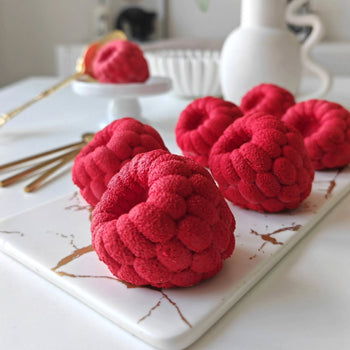
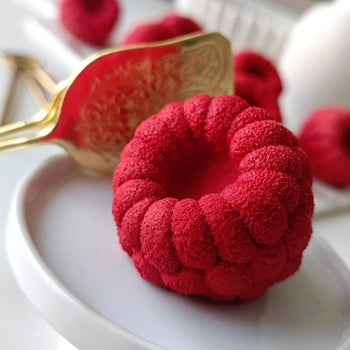
- Raspberry illusion cake: coating in colored white chocolate for fake fruit
- Strawberry pistachio tart: white pistachio ganache in the tart shell
- White drip cake over buttercream ganache, for celebration cake design
- White mirror glaze for entremets
- Frozen cheesecake, with callets melted into the cream cheese and cream mixture
For other recipes and products, see the Callebaut collection.
Coloring white chocolate
White chocolate is used as a base for creating colored chocolates. Water-based colorings are not compatible with chocolate.
- Oil-soluble colorings for chocolate (powder or oil-based gel): the only types compatible with chocolate fat
- Colored cocoa butter: pre-mixed and ready to use, ideal for a velvet effect with a spray gun
- Dosage: 0.5 to 1% of the chocolate's weight is enough for a saturated color
- Method: add the coloring to the melted chocolate at 35 °C, then blend with an immersion blender until smooth
For a marbled or multicolored effect, melt several small quantities separately, then pour them alternately into the mold.
Storage and shelf life
- Temperature: between 12 and 20 °C, never in the refrigerator (humidity affects the flavor)
- Humidity: low, in a dry cupboard away from direct light
- Packaging: reseal tightly after opening
- Avoid: storing near strong-smelling foods (spices, cheese); chocolate absorbs odors
- Best before: 12 months from the date of manufacture, depending on the format
If fat bloom occurs (white spots on the surface), the chocolate is still safe to eat but requires re-tempering before professional use.
Composition, allergens and certification
Ingredients: sugar, 29.5% cocoa butter, whole milk powder, emulsifier E322 (soy lecithin), natural vanilla flavoring.
Allergens: contains milk and soy. May contain traces of tree nuts, gluten and eggs.
Certification: certified kosher.
Nutritional values (per 100 g):
| Nutrient | Quantity |
|---|---|
| Energy | 2,379 kJ / 569 kcal |
| Fat | 36 g |
| of which saturates | 22 g |
| Carbohydrates | 55 g |
| of which sugars | 55 g |
| Protein | 6 g |
| Salt | 0,2 g |
Professional use
- Consistency: consistent taste, fluidity and crystallization from batch to batch
- Callet format: precise weighing and faster melting than a bar that needs breaking
- Composition: 28% cocoa and 29.5% cocoa butter, suitable for enrobing and ganache
- 4 sizes available: from 400 g for trials to 10 kg for intensive production
Frequently asked questions
Can this white chocolate be eaten as is?
Yes, the callets are ready to eat, but their primary use is in baking and pastry-making.
Why did my callets melt during shipping?
Due to temperature fluctuations during shipping, the callets may partially melt. They are still usable: follow the usual melting and tempering instructions; the taste and properties are unchanged.
What is the difference between Callebaut and Cacao Barry?
Callebaut and Cacao Barry are two brands belonging to the same group (Barry Callebaut). Callebaut focuses on chocolate-making and Belgian recipes, while Cacao Barry focuses on pastry-making and French recipes. Choose according to your taste preference.
Can this white chocolate be used in baking?
Yes, for cookies, chocolate chip brioche and filled pastries. The 1 kg or 2.5 kg sizes are suitable for these uses.
How fluid is this white chocolate?
3 drops on the Callebaut scale, meaning medium fluidity, versatile for enrobing, molding and glazing.
Is an organic version available?
Callebaut offers an organic range of dark and milk chocolate, but organic white chocolate is not consistently available in the range. See the Callebaut collection for available products.
Is this product suitable for a vegetarian or vegan diet?
Vegetarian: yes. Vegan: no, as it contains whole milk powder.
Learn more
- Order Preparation: 0 to 2 working days
- France, Belgium, Germany: 1 to 2 working days
- Europe: 2 to 5 working days
- Click & Collect Osny: 24-48h
- FR, BE, DE: based on weight
- Europe: based on country and weight
- Click & Collect Osny: Free